Thursday, 21 April 2016

Many peoples have (upon accepting Christ) given up on much of their tribal based ancestral practices, witchcraft and sorcery for the new found life in Jesus Christ. Most of such people are found in Africa, Asia, and America. For paganist practices (from Babylon) spread first amongst the Europeans before it did in any other part of the world (Revelations 18:1-8).

The Europeans, under the guise of spreading Christianity, they carried on these practices to other parts of the world. For the Europeans have been quite imperialistic. And in this, they blend the Christian Faith with much of their practices in a bid to have their cultures felt elsewhere. And indeed, the European culture can be felt in every part of the world.

Yet such practices have their source in paganist Babylon.  For if I may ask; what is the origin of wearing black on funerals? For if one wears a bark cloth on a funeral, he will be deemed either backward or so much of a culturalist. But to look decent is, (according to Africans) to be modern.

So then, that many Christians have massively adopted such practices, they are being only under oblivion, they have yet to discover that they are worshiping gods and following devilish cultural beliefs of other peoples who have masqueraded as Christian (Europeans and Babylonians).

Some peoples only give an appearance of a Christian but they are not so in substance. They disguise their devil worship practices as being part of the Christian Faith. They only take advantage of the readily universal coverage and acceptance of the Christian Faith so to promote their ill intended agenda. They only seek to obscure Jesus with their devil worship practices.

Easter is a very popular day world over. And it is okay to celebrate the resurrection of the Lord Jesus Christ. But devil worshipers have sought to take advantage of this day to spread their evil cultural devil worship practices.

Where did “Easter” get its name? Where did the concept of an Easter egg and bunny originate?

The name “Easter” has its roots in ancient polytheistic religions (paganism). On this, all scholars agree. This name is never used in the original Scriptures, nor is it ever associated biblically with the death and resurrection of Jesus Christ. For these reasons, we prefer to use the term “Resurrection Sunday” rather than “Easter” when referring to the annual Christian remembrance of Christ’s resurrection.

Ancient origin

Most reference books say that the name “Easter” derived from the Eastre, the Teutonic goddess of Spring. Although this relationship exists, in reality, the origin of the name and the goddess are far more ancient—going all the way back to the Tower of Babel. The origin begins not long after the biblical Flood.

The Flood was a divine judgment sent on mankind after evil had become all pervasive, and all people everywhere were totally unresponsive to God. The Bible says that “the wickedness of man was great in the earth, and that every intent of the thoughts of his heart was only evil continually” (Genesis 6:5). It is not difficult to imagine that life must have been almost unbearable at this time in history. God gave humankind a second chance by preserving the righteous man Noah and his family (a total of 8 people).

After the Flood, Noah had a talented, but evil, great-grandson named Nimrod (Genesis 10:6-10) who rebelled greatly against God. The Bible says that he was “a mighty one” Jewish tradition indicates that Nimrod was a tyrant “who made all of the people rebellious against God.” It is evident from history that Nimrod was not only a political leader, but also the lead priest of a form of occultic worship.


King Nimrod, Queen Easter (Ishtar/Semiramis), and Tammuz (the “reincarnated” Nimrod)

Nimrod built and organized major cities. The Bible notes that these included Babel, Asshur, Nineveh and Calah (Genesis 10:10-12). If you know anything about ancient history, the mention of these places may send shivers up your spine. For these were cities of great, almost unimaginable practices and perversion.

When Nimrod eventually died, the Babylonian religion in which he figured prominently continued on. His wife/queen saw to that. Once he was dead, she deified him as the Sun-god. In various cultures he later became known as Baal, the Great Life Giver, the god of fire, Baalim, Bel, Molech, etc.

“Later, when this adulterous and idolatrous woman gave birth to an illegitimate son, she claimed that this son, Tammuz by name, was Nimrod reborn.” Easter/Ishatar “claimed that her son was supernaturally conceived [no human father] and that he was the promised seed, the ‘savior’”—promised by God in Genesis 3:15. “However, not only was the child worshiped, but the woman, the MOTHER, was also worshiped as much (or more) than the son!” Nimrod deified as the god of the sun and father of creation. Easter became the goddess of the moon, fertility, etc.


“In the old fables of the Mystery cults, their ‘savior’ Tammuz, was worshiped with various rites at the Spring season. According to the legends, after he was slain [killed by a wild boar], he went into the underworld. But through the weeping of his mother… he mystically revived in the springing forth of the vegetation—in Spring! Each year a spring festival dramatically represented this supposed ‘resurrection’ from the underworld.”

Thus, a terrible false religion developed with its sun and moon worship, false priests, astrology, demonic worship, worship of stars associated with their gods, idolatry, mysterious rites, human sacrifice, and more. Frankly, the practices which went on were so horrible that it is not fitting for me to speak of them here.

It was at Nimrod’s city of Babel (Babylon) that a towering structure was first built in defiance of God as part of their Satanic religion. Archaeological evidence indicates that this was a spectacular pyramid-shaped structure (ziggurat). The Bible tells us that at this time there was only one language in the world and that most of the world’s population centered in this area and participated in this religion. It was evident to God that all mankind would soon degenerate into a level of evil that would parallel that of the pre-Flood world. For humanity’s sake, something had to be done to slow and frustrate this organization of an evil one world, tyrannical government.

God confused their language, so that they could not understand each other (Genesis 11:7). (This is the ultimate source of the world’s many languages.) As a result, many people moved away from the area in groups according to their particular new language. Most, if not all, of these people carried their evil Sun-God-based religion with them. They continued to worship the stars and practice all the other ungodly rituals of their religion. Some also continued to build pyramids reminiscent of the Tower of Babel as part of this mystery religion. Today, we can still find remnants of these throughout the world (e.g., Iraq, South America, Central America, Egypt, Burma).

Babel was the origin of an idolatrous system that swept the world. The Bible says of her, “Babylon… the nations drank her wine; Therefore the nations are deranged” (Jeremiah 51:7). The Bible often speaks of the Satanic religions which came from her. The ancient Greek historian Herodotus “witnessed the Mystery religion and its rites in numerous countries and mentions how Babylon was the primeval source from which ALL systems of idolatry flowed.” Austen Layard said “that we have the united testimony of sacred and profane history that idolatry originated in the area of Babylonia—the most ancient of religious systems.”

Basically, almost every vile, profane and idolatrous practice you can think of originated at Babel with Queen Easter/Ishtar (Semiramis), the Mother Goddess and Nimrod.

As the people scattered from Babel with their different languages, they, of course, used different names for Nimrod (Tammuz) and Semiramis. Some called the Mother Goddess “ISHTAR” (originally pronounced “Easter”). In other lands, she was called Eostre, Astarte, Ostera, and Eastre. Other names for Semiramis, the Mother Goddess include: Wife of Baal, Ashtaroth or Ashtoreth, and Queen of Heaven. The Mother goddess was frequently worshiped as the goddess of fertility—and as a sort of Mother Nature and goddess of Spring and sexual love and birth. She was also worshipped as a mediator between god and man. Sexual orgies and temple prostitutes were often used in her worship and in attempting to gain her favor.

The Easter Rabbit or Hare

The rabbit is well known as a sexual symbol of fertility. In various parts of the world, religions which developed from Babel also associate the rabbit with periodicity, both human and lunar (Egypt, China, etc.). As you may remember, the Mother Goddess Easter (Semiramis) is associated with the Moon. In other words, the Easter bunny symbolizes the Mother Goddess. Annual Spring time fertility rituals are associated worship of the Mother Goddess and Tammuz, the reincarnation of her husband Nimrod.


The Easter Egg

Most children and families who color or hide Easter eggs as part of their Resurrection Sunday tradition have no knowledge of the origin of these traditions. Easter egg activities have become a part of Western culture. Many would be surprised and even dismayed to learn where the traditions originated.

“The egg was a sacred symbol among the Babylonians. They believed an old fable about an egg of wondrous size which was supposed to have fallen from heaven into the Euphrates River. From this marvelous egg—according to the ancient story—the Goddess Astarte (Easter) [Semiramis], was hatched. And so the egg came to symbolize the Goddess Easter.

The idea of a mystic egg spread from Babylon to many parts of the world. In Rome, the mystic egg preceded processions in honor of the Mother Goddess Roman. The egg was part of the sacred ceremonies of the Mysteries of Bacchus. The Druids used the egg as their sacred emblem. In Northern Europe, China and Japan the eggs were colored for their sacred festivals.


The egg was also a symbol of fertility; Easter (Semiramis) was the goddess of Fertility. The Easter egg is a symbol of the pagan Mother Goddess, and it even bears one of her names.

Summary and Conclusion

“Easter” is simply one of the names of a woman who mightily deceived the world and whose religion has caused untold suffering and misery. She was clearly an enemy of the true God, and her son Tammuz was an anti-Christ, a false messiah that ultimately deceived millions.

If you are Christian, it is not difficult to discern the bizarre deception and confusion that Satan has successfully orchestrated. For example, notice the embarrassing irony in these traditions which are practiced innocently by most people. They are repeated year after year, because they have become traditional and their origin is unknown to many.

  • On the day commemorating Christ’s resurrection, Americans roll decorated eggs on the White House lawn and pretend the Easter rabbit hid them. The same ritual is practiced at some Christian churches. 
  •  “In Lancashire [England] on Easter eve boys and men have been in the habit of touring the towns and villages as ‘Pace-eggers’ begging for eggs before performing the ‘Pace-Egging’ or Pasch (i.e., Easter) play.”
  • In Greece each person in a group bangs his red EASTER EGG [not knowing that it is symbol of the Goddess] against the eggs of all the others present in turn, saying ‘Christ is risen,’ and receives the reply ‘He is risen indeed’.”
The seductive symbols of ancient ungodly religions inspired by Satan have been incorporated into people’s everyday lives, even to this day—continuing to obscure the truth of God .

One might wonder if there is a better way for Christians to celebrate Jesus Christ’s resurrection, the most important of all Christian holy days. In retrospect, it seems obvious that it would have been a better witness to the world if Christians had not attempted to “Christianize” pagan celebrations—adopting the name “Easter” (Ishtar/Semiramis) in remembrance of Christ.

Jesus has been obscured by painted eggs and bunnies. Attention has been shifted away from spiritual truth and toward materialism (clothing, products and candies with the wrong symbolism). Stores merchandise the name of “Easter” (not “Resurrection Sunday”) and sell goods that have nothing to do with Christ’s death and resurrection. Christians naively use symbols and practices that unknowingly perpetuate ancient anti-Christ traditions—symbolic customs followed by the same religious cults that inspired the destruction of great numbers of Christians and Jews. Is the Devil laughing at us?

Many church bodies recognize the problem and make every effort to keep the focus of Resurrection Sunday totally on Jesus Christ and the Good News that He brought.  

Monday, 18 April 2016

To follow or not follow a religious group or leader should be based on principle and character rather than on-look admiration. It calls for a person who can match what scripture says he should be. He should be Christian and must be of a given character.

Scripture is the principle guide

It is impossible to do without leaders, (only if they do not intend to assume powers they should not). For some leaders can be misleading. This kind of scenario also perturbed the Apostle Paul so much that by what he wrote to the Galatians, you can feel his anger (Galatians 2:6). So, if even the Prophet Jonah had tried to resist going the way God had commanded and directed him, what makes one believe that it won't happen to them? And if a leader can be misled, can't he be the one to mislead others? Sometimes it is the very leaders who may stand as a hindrance to the accomplishment of the very task.

In this therefore, whatever it may be, leadership is categorical. Rather that leadership can be unique to a particular person as may be intended for a particular people (Galatians 2:7-9). This implies that one who may not fall under that particular category may not necessarily entirely admit to it.

The case of Elijah gives us very good lessons. The prophet Elijah was complaining to God how that all men of God had been murdered. And that he was the only surviving individual (1Kings 19:9-14). God in reply told him (Elijah) that He (God) had a reserve of Seven hundred who had not bowed to Baal (1Kings 19:18). God's statement to Elijah teaches us that God does not condition His work on an individual who can be vulnerable and wanting in many ways.

But it is also paramount to understand that He (God) does not go on picking on one person after the other. This is because He is the Omniscient God who chooses on whoever He does when He already knows who they are. Rather if God has chosen on a particular person for a given task, He (God) will make sure that that person accomplishes the task.

When God told Elijah of His (God's) reserve of Seven Hundred, did He disqualify him (Elijah)? The same also is mirrored in Jonah's case (Jonah 1). Why didn't God just choose on another person in place of Jonah when Jonah had initially diverted to Tarshish rather than Nineveh where he had been sent? God will use a person if He chooses to despite a person's seeming literal limitations.

Jonah
So then, all this should teach us that leadership comes from God. And so it is God who empowers a person to perform a leadership role. Not that that person is talented to be so by his own ability. Thus then , no one should boast that he is in leadership. Leadership is God's own project.

Additionally, leadership may not be about pleasing individuals, but fulfilling a mission. Christian leadership should never be compromised in any way (Galatians 1:10). We should always keep to the dictates of the calling. Otherwise, you can always be disqualified albeit may continue to seem as one.

Therefore then, a leader should stick to the way how he has been called. As a leader, you are answerable to the Master (Jesus Christ). However, this is not to say you are entirely and completely independent of whoever. Rather you are also accountable to the ones you lead and those you lead with. That is why the leadership of the Church of Christ is built on pastors, elders, and deacons who are all expected to work together under a head who also is guided by the Holy Spirit (but together as a team) (1Timothy 3:1-10, 5:17), (Titus 1:6-9), (James 5:14), (1Peter 5:1), (Acts 14:23, 15:1-2, 15:4).

Yet Pentecostalism (to which I subscribe) does not readily entertain centralized leadership. As so, we do not believe in universal religious leaders. We believe that Jesus CHRIST is the universal head of the Church. He Jesus) directs the Church by giving us the Holy Spirit.


We do not believe in universal (earthly) headquarters of the Church. We believe that the headquarters of the Church is in heaven. However, in certain incidences, there are denominational heads. But like we have mentioned above, there are leaders in pastors, elders and deacons without whom, a church may be difficult to manage well.

Pentecostalism is founded on scripture. Rather Pentecostals should not practice any extra canonical  authority. Looking to Jesus CHRIST is the principle.

Pentecostal Christianity is also not necessarily concerned with following a particular leader. It is strongly advisable, though, to belong somewhere under someone. It is crucial that everybody is discipled as a requirement for disciplined Christian living and for would be Christian leaders.

But for a personal relationship with God is categorically a decision of an individual. It is undeniable, though, that some other people come into our lives (when they are God sent) to help guide us into a relationship with God, yet the final counting decision is solely made by a particular person. For in Spiritual terms, every particular person will account for their decisions (Romans 14:10-12). Yet this is not to wish away each other's responsibilities (Ezekiel 3:20, 33:6).   

Thus then, there is no reason why a Christian shouldn't follow someone if they guide them in the way of and to Christ (Ephesians 5:2), (Philippians 2:1-8). I follow a leader in whom I can envisage the required materials to guide me in the way of Christ and subsequently to heaven. That is the one major reason I chose to be Christian.

Could we expound on these virtues for a Christian leader?

  • Follower of Jesus CHRIST/Christian.
  • Following Scripture.
  • Character.
Follower of Jesus CHRIST/Christian

A Christian leader must be one who follows and submits to the authority of CHRIST. After all, the whole philosophy of Christianity is about CHRIST without whom, it could have never been. The Apostle Paul is only in position to instruct the Corinthians to follow him for one outstanding reason; that he followed CHRIST (1Corinthians 11:1).

Follow me as I follow Christ
For the Apostle Paul to be what he had become (an Apostle and a leader), it was not for who he was/is. Rather it was/is for what he had chosen to submit to; Paul had chosen to follow Jesus CHRIST. To be a Christian leader therefore, you have to have committed to submission to CHRIST. Jesus Christ is the cornerstone of the Christian Faith (Isaiah 28:16), (Psalms 118:22), (Acts 4:10-11), (Romans 9:33), (Ephesians 2:20-22), (1Peter 2:7-8).

Following scripture.

A Christian leader must be one who takes scripture as how it is laid down in the Bible. Rather he should be guided by the Holy Spirit just within and along the path of what scripture stipulates. "All Scripture is God-breathed and is useful for teaching, rebuking, correcting and training in righteousness, 17so that the man of God may be thoroughly equipped for every good work" (2 Timothy 3:16-17).

It is scripture which guides a Christian leader to lead just how God requires. Christian leadership isn’t about prestige; it is about guiding a people into the right path which leads them to heaven. This was the basic mission of Jesus while on earth. He gave up all so that He could lead a soul out of hell to heaven. 

So then, Christian leadership is sacrificial as is exemplified by our Lord and Savior Jesus Christ. A leader must not be selfish. This is not about self. It is about the people being led. Scripture, as guided by the Holy Spirit is the foundation. 

How well or wrongly/poorly scripture is used will define the destination of and which product one individual will become. If one is guided by instructions as they are stipulated in scripture, there is no reason why Christians shouldn’t follow them, if they happen to be in a position of leadership.

NB We shout when the Bible shouts, we keep silent if it does keep silent.

Character.

A leader must be exemplary (1 Timothy 3:2-12), (Titus 1:6). For leadership is not a wishful matter. How one leads tells much what product the people he leads become. A Christian leader should not be a leader for himself, but for the people. This is what must manifest in their character. 

A leader must not be emotional, must be one with a mission, from which he can’t be swayed by rumors, insults or provocations. This is just how Jesus defeated the devil. He (Jesus) was never overtaken by insults. He was never provoked. He kept Himself to the dictates of the mission. 

Jesus defeated the devil by character, and finally by the crucifixion. Jesus' character is part of what gives us confidence in Him. A leader must have the confidence of the people he leads. This only comes by a consistent exemplary character.

A leader, who can fulfill the above, could be assured of people's confidence to and allegiance in them. Christian leadership can only be made possible and successful if with CHRIST. For Jesus is the Author and Perfecter of the Christian Faith (Hebrews 12:2). 

To have or not to have the authority should depend on whether you follow CHRIST as the overall head and model of the Church. CHRIST grants the authority. It is all about Jesus CHRIST. 

The Church of Jesus Christ is not for promoting persons. No. Not at all. The Church of Christ is for promoting God's Kingdom. Everyone who wishes to serve or lead in God's service must fit just within this particular agenda of God. Short of this is automatic disqualification.

Wednesday, 13 April 2016

There are three vital things which God grants us and these do govern the potential of a person in life. These are: Wisdom, Knowledge, and Understanding (Exodus 31:3, 35:31).

Where is the source of Understanding? Job asks. (Job 28:20)

Understanding comes by Revelation. And Revelation comes from God by His (God's) guidance. God guided John to the island of Patmos so that He (God) could reveal to John the things that John couldn't see literally. God then told him to write the book of Revelation (Revelation 1:10).

We terribly lack understanding, yet we are resistant to guidance. If John had resisted being guided to the island of Patmos, it is most likely that he (John) wouldn't have been the author of the book of Revelation.

Jesus does recognize this terrible part of us (Matthew 22:29). In our terrible quest to remain ignorant, we think it is defeat if we concede lack of understanding. And this keeps us in continual ignorance on many things which could easily be understood if we let guidance. Understanding therefore may never simply be grasped by engaging, but by the guidance of God through the Holy Spirit.

If we do not understand, then we can never make sense of anything. That is why scripture is emphatic on urging us to understand. It is paramount that we should always understand what we do. And that we should make those we work with or lead do so.

Nehemiah made sure that everybody understood what he was doing (Nehemiah 10:28). It could terribly be defeating and an accident ready to happen if we do something that nobody else does understand. On His mission, Jesus sought to make people understand who He is and what He came for (Luke 4:18).

God gives us revelation and the prophets so that we have knowledge of what is to happen next, so that we can understand it and be able to go about it well.In this then, God wants us to understand and scripture does indeed appreciate this as can be seen below:

Luke 24:45-"Then He opened their minds to understand the Scriptures,

Exodus 36:1 - "Then wrought Bezaleel and Aholiab, and every wise hearted man, in whom the LORD put wisdom and understanding to know how to work all manner of work for the service of the sanctuary, according to all that the LORD had commanded".

Deuteronomy 1:13 - "Take you wise men, and understanding, and known among your tribes, and I will make them rulers over you".

Deuteronomy 4:6 - "Keep therefore and do them; for this is your wisdom and your understanding in the sight of the nations, which shall hear all these statutes, and say, Surely this great nation is a wise and understanding people".

Deuteronomy 32:28 - "For they are a nation void of counsel, neither is there any understanding in them".

1Samuel 25:3 - "Now the name of the man was Nabal; and the name of his wife Abigail: and she was a woman of good understanding, and of a beautiful countenance: but the man was churlish and evil in his doings; and he was of the house of Caleb".

1Kings 3:9 - "Give therefore thy servant an understanding heart to judge thy people, that I may discern between good and bad: for who is able to judge this thy so great a people?

1Kings 3:11 - "And God said unto him, Because thou hast asked this thing, and hast not asked for thyself long life; neither hast asked riches for thyself, nor hast asked the life of thine enemies; but hast asked for thyself understanding to discern judgment;

1Kings 3:12 - "Behold, I have done according to thy words: lo, I have given thee a wise and an understanding heart; so that there was none like thee before thee, neither after thee shall any arise like unto thee".

1Kings 4:29 - "And God gave Solomon wisdom and understanding exceeding much, and largeness of heart, even as the sand that is on the sea shore".

1Kings 7:14 - "He was a widow's son of the tribe of Naphtali, and his father was a man of Tyre, a worker in brass: and he was filled with wisdom, and understanding, and cunning to work all works in brass. And he came to king Solomon, and wrought all his work"

1Chronicles 12:32 - "And of the children of Issachar, which were men that had understanding of the times, to know what Israel ought to do; the heads of them were two hundred; and all their brethren were at their commandment".

1Chronicles 22:12 - "Only the LORD give thee wisdom and understanding, and give thee charge concerning Israel, that thou mayest keep the law of the LORD thy God".

2Chronicles 2:12 - "Huram said moreover, Blessed be the LORD God of Israel, that made heaven and earth, who hath given to David the king a wise son, endued with prudence and understanding, that might build an house for the LORD, and an house for his kingdom".

2Chronicles 2:13 - "And now I have sent a cunning man, endued with understanding, of Huram my father's,

2Chronicles 26:5 - "And he sought God in the days of Zechariah, who had understanding in the visions of God: and as long as he sought the LORD, God made him to prosper".

Ezra 8:16 - "Then sent I for Eliezer, for Ariel, for Shemaiah, and for Elnathan, and for Jarib, and for Elnathan, and for Nathan, and for Zechariah, and for Meshullam, chief men; also for Joiarib, and for Elnathan, men of understanding".

Ezra 8:18 - "And by the good hand of our God upon us they brought us a man of understanding, of the sons of Mahli, the son of Levi, the son of Israel; and Sherebiah, with his sons and his brethren, eighteen;

Nehemiah 8:2 - "And Ezra the priest brought the law before the congregation both of men and women, and all that could hear with understanding, upon the first day of the seventh month".

Job 12:3 - "But I have understanding as well as you; I am not inferior to you: yea, who knoweth not such things as these?

Job 12:12 - "With the ancient is wisdom; and in length of days understanding".

Job 12:13 - "With him is wisdom and strength, he hath counsel and understanding".

Job 12:20 - "He removeth away the speech of the trusty, and taketh away the understanding of the aged".

Job 17:4  - "For thou hast hid their heart from understanding: therefore shalt thou not exalt them".

Job 20:3 - "I have heard the check of my reproach, and the spirit of my understanding causeth me to answer".

Job 26:12 - "He divideth the sea with his power, and by his understanding he smiteth through the proud".

Job 28:12 - "But where shall wisdom be found? and where is the place of understanding?

Proverbs 18:2 - A fool hath no delight in understanding, but that his heart may discover itself.

Proverbs 14:29 - [He that is] slow to wrath [is] of great understanding: but [he that is] hasty of spirit exalteth folly.

Proverbs 2:2-5 - So that thou incline thine ear unto wisdom, [and] apply thine heart to understanding.

Proverbs 17:27 - He that hath knowledge spareth his words: [and] a man of understanding is of an excellent spirit.

Proverbs 3:13-18 - Happy [is] the man [that] findeth wisdom, and the man [that] getteth understanding.

Proverbs 20:5 - Counsel in the heart of man [is like] deep water; but a man of understanding will draw it out.

Knowledge can only profit if it entails "understanding". The Ethiopian Eunuch read the scriptures, and it appears pretty much he had the zeal to read, but that is all he could do, he lacked understanding (Acts 8:30). Fortunately, he was open to guidance. And when Philip factored in, he (the Ethiopian Eunuch) was readily receptive.

Philip and the Ethiopian eunuch
Jesus dressed in human flesh so that He could literally guide us in the way of God. God had given us instructions by way of commandments and we could not adhere to them. But when Jesus dressed in human flesh and appeared amongst us, He has made an indisputable lasting impact by being directly exemplary to us.

When the Helper who is the Holy Spirit comes, one of the things He is to do is to testify of Jesus (John 15:26). Thus then, Jesus and the Holy Spirit are to work together to make us come to the true knowledge of God. For the Holy Spirit convicts us on what Jesus has commanded and taught us to do. Together, you can do much.

In this light then, we ought to understand the Trinity. Jesus taught us not only about His person, but also about God the Father, and God the Holy Spirit. It is thus paramount that we understand both: Jesus and His word. Jesus is as vital as His word, and the opposite is true (Matthew 7:21-23), (Hebrews 4:2), (Matthew 7:24, Luke 6:47-49). If we pray in Jesus' name (and it works to pray in Jesus' name), then we should also take His (Jesus') word pretty seriously. And we should also treat His commandments as very vital (John 15:14-15), (Luke 6:46).

And we also ought to seek to understand the person of Jesus much as we do His word (John 6:33-35, 41-42, 48-58, 60-61, 63, 66). For Jesus is the word, and the word is Jesus.

Philip said to Him, “Lord, show us the Father, and it is sufficient for us.” Jesus said to him, “Have I been with you so long, and yet you have not known Me, Philip? He who has seen Me has seen the Father; so how can you say, ‘Show us the Father’? Do you not believe that I am in the Father, and the Father in Me? The words that I speak to you I do not speak on My own authority; but the Father who dwells in Me does the works.  Believe Me that I am in the Father and the Father in Me, or else believe Me for the sake of the works themselves" (John 14:8-11).

Jesus gives us direction and it is upon Him that our Faith is built (Hebrews 12:2). For it is best and well understood that way. Jesus is the cornerstone of anything and everything Christian (Psalms 118:22), (Matthew 21:42).


The gospel of Jesus Christ can be understood along the following:

  • God the Father
  • The person of Jesus
  • The person of Jesus as the foundation of the gospel
  • The Holy Spirit
  • Embracing Jesus Christ and His teachings
  • Repentance
  • Bearing the fruit of repentance
  • Love
  • Forgiveness
  • The gospel of peace
  • The gospel of healing

God the Father

When Jesus came, He taught about God the Father (Matthew 6:9). He wanted us to be assured that there is God the Father and that He (God the Father) does indeed love and care for us. Jesus came so He could cleanse us, lead us and present us to the Father. And in much of His speech, He would refer to the Father (YAHWEH) (John 5:20-24).  So Jesus was teaching us that the project to save man had been long an initiative of the Father and fulfilled by the Son.

At one time, Jesus said He could never do a thing that He is not learnt from or without the Father (John 5:19, 30). Equally so, we witness by scripture that the Father referred to Jesus as Son (Mark 1:11), (Matthew 3:16). In this, Jesus wanted us to learn that the source of all life, power, love goodness, purity, holiness and righteousness is the Father (who had also presented Himself in the Son). He wanted us to know that to be able to live a positive spiritual life, we have to ready to learn from God. 

More scripture about God the Father. 

 Luke 10:21-22 
In that same hour he rejoiced in the Holy Spirit and said, “I thank you, Father, Lord of heaven and earth, that you have hidden these things from the wise and understanding and revealed them to little children; yes, Father, for such was your gracious will. All things have been handed over to me by my Father, and no one knows who the Son is except the Father, or who the Father is except the Son and anyone to whom the Son chooses to reveal him.”

John 10:30 

I and the Father are one.”

Matthew 10:20

For it is not you who speak, but the Spirit of your Father speaking through you.

Matthew 24:36 

“But concerning that day and hour no one knows, not even the angels of heaven, nor the Son, but the Father only.

John 12:44-45

And Jesus cried out and said, “Whoever believes in me, believes not in me but in him who sent me. And whoever sees me sees him who sent me.

Matthew 11:27

All things have been handed over to me by my Father, and no one knows the Son except the Father, and no one knows the Father except the Son and anyone to whom the Son chooses to reveal him.

Mark 13:32

“But concerning that day or that hour, no one knows, not even the angels in heaven, nor the Son, but only the Father.

Luke 15:20

And he arose and came to his father. But while he was still a long way off, his father saw him and felt compassion, and ran and embraced him and kissed him.

Matthew 28:19

Go therefore and make disciples of all nations, baptizing them in the name of the Father and of the Son and of the Holy Spirit,

The person of Jesus Christ

Jesus' Gospel is also about His person. Jesus Christ is the gist of the gospel. Every thing is because the Son is (John 1:1-2). And without Jesus, it is pretty and terribly impossible to understand this gospel. And if you can't understand who Jesus is, neither will you understand who God the Father or the Holy Spirit is.

Thus to ask; who is Jesus?

Jesus attempted to reveal to the disciples what His person is. But He always loves it that it comes by revelation rather than Him to seem to orchestrate it.

At one moment, Jesus asked what the disciples had understood of Him to be; Peter said; "...you are the Christ, the Son of the Living God" (Matthew 14:16), (Mark 8:29-30). In reply, Jesus commended Peter for this lovely revelation.

Additionally, at the last supper, when Jesus shared with the disciples bread and grape vine juice, he said; "Take, eat; this is my body". And he took the cup, and gave thanks, and gave it to them, saying, Drink ye all of it;  For this is my blood of the new testament, which is shed for many for the remission of sins (Matthew 26:26-28).

Jesus is the light
Going further in scripture, God the Father (in His voice) admonishes that the person of Jesus Christ is His Son (Matthew 3:17), (Mark 1:11), (Matthew 12:18), (Matthew 17:5), (Mark 9:7).

The person of Jesus Christ as the foundation of the Gospe
l

Jesus Christ being who He is, and understanding Him as so, He was anointed by the Father to save the world by way of His perfect sacrifice. For Jesus is the name of the person, yet Christ is what He is.

In Jesus' person (the Christ), He revealed what His mission is; to set the world free of sin (Luke 4:18), (Isaiah 61:1). In the same vein then, the person of Jesus  makes it that we can understand what the purpose of the Gospel is.

Jesus' mission is to set the foundation for our Faith (John 8:24), (John 6:29). For only through Jesus we can approach God the Father (John 14:6), (John 10:9). Without Jesus, there is no Christian (John 15:1-8).

The first man in Adam failed to live to his abilities; the second man in Jesus lived up to His abilities. Jesus thus used His abilities to accomplish a mission. He (Jesus Christ) is the foundation of the Gospel of the New Testament (1 Corinthians 15:47, Romans 5:18). For by the righteousness of Jesus, we are counted worthy.

God the Holy Spirit

In much of His teachings, Jesus pretty much referred to God the Holy Spirit. He said that when He left earth, He would let the Holy Spirit on us who would teach us more, guide us, comfort us, give us wisdom, give us remembrance of all Jesus' teachings, give us power and convict us of; sin, truth, and righteousness (John 14:26, 16:7-15), (Romans 8:26, 15:13).

The Holy Spirit convicts us of sin, righteousness and judgment
The Apostle Paul also teaches us that if we have the Holy Spirit, then we know the mind of God. For no one knows a person's thoughts except his spirit. So, the Holy Spirit knows the mind of God and if we receive Him, then we know the mind of Christ (1Corinthians 2:12-16). So it is then that if one has not Christ, then he has not the Spirit of Christ. And if one has not the Spirit of Christ, then he is not of Christ (Romans 8:9).

Are they three Gods?

No. Not at all. They are not three Gods. It is one God who presents in the three. The same God is God the Father. The same God is God the Son. And the same God is God the Holy Spirit. Each of the three is the same God as the other (John 14:9). 

Embracing Jesus Christ and His teachings

On the person of God, the gospel of Jesus Christ is built. No one else with the righteousness of God. Jesus alone who is the Son of God and God stood to save man. The person of Jesus is exceptional because in Jesus is the person of God. Jesus is never like any other person. He is God. Life is in Him and in His teachings.

Through Jesus therefore, there is hope of life after death (John 11:25), (John 5:24). Yet to deny Jesus can be self judgment to eternal condemnation (John 3:19).

It shouldn't therefore be simply wishful to choose to follow Jesus. He is tested, proven and justified by the Father. Jesus is worthy because He lived a life free of sin (John 8:46). Jesus gives us an opportunity to relive a life of honor.

For this, it is perfectly fitting and rightly commensurate to fall in love with Jesus. Only Jesus has exhibited to us the kind of love that is limitless in every way.

Unlike others, Jesus never breaks a person's heart. If you give your life to Jesus, you pretty stand assured. If you already have given your life to Jesus, the wisest thing ever in your life is to keep just with Him.

Repentance.

Repentance is the action of repenting. It is an expression of sincere regret or remorse. Having offended someone, what comes next should be repentance.

Every human person is a sinner. It is simply empty and shameless one to deny and insist he is not a sinner (1John 1:9-10). It is a weakness rather than a strength to insist not to repent. It is terribly shameful and unbecoming!!!

By way of Adam having sinned, anything human is ingrained with sin (Romans 3:23). Apart from being known as human, man's other name should be SINNER!

Salvation therefore does not come by keeping a set of moral obligations. Neither is it that being not saved is the failure to keep the same. 

Salvation is not what we do. Salvation is what Jesus makes us to be. And what Jesus makes us to be is in the heart, not what we are literally. To do or not to do certain things can't bring a person Salvation. Such may only be for public consumption (Colossians 2:20-23).

Spiritual healing therefore comes from within out, and not from out in. So, our actions should be sourced and determined in the heart rather than to simply act.

It is groundless to think that your actions can influence your heart. It never can be!!!??? For it should be rather that your heart will influence your actions. We can only impress fellow men but not the Omnipresent and Omniscient God!!!

"Celebrate the beauty of your heart and not your riches". 

Salvation is life. It is a recreation of a relationship with God. If to say; Salvation is the character of God. And the character of God is; righteousness, love, joy, peace, forbearance, kindness, goodness, faithfulness, gentleness and self-control (Galatians 5:22), (Romans 14:17).

Christians are perpetually failing in spiritual progress simply because we prefer to struggle to appear as good moral people (looking for justification from others) rather than to submit to Jesus (the only one who can make us good).

Salvation does not come out of fear. It should rather be out of conviction. Salvation is a gift which is granted by God through His Son Jesus Christ.

Jesus always called for and encouraged repentance so to be counted for God (Luke 13:1-5), (Luke 18:9-14). Everyone who loves God should repent. Repentance creates a whole new beginning. It is a new lease of life. With Jesus, it is a whole new world.

There is no sinner whom can't be forgiven. All you need is; admit your sin (wrong and bad perception and wrong doing) and repent.

Jesus died for every bit of a sin. He (Jesus) is seated on the right hand of God the Father interceding for every bit of every sin (Romans 8:33-34).

A repentant sinner
Bearing the fruit of repentance

Repentance cements a person's new found life in Jesus Christ. This is to pursue to live a transformed life.

A repentant person keeps aligned to living a repentant life. Such a person is focused to living a life that is to the glory of God.

Relentlessly and unceasingly yearning to have a heart that is after the heart of God and pursuing righteousness.

There must be evidence of a Christian both inwardly and outwardly in the way you go about your life.

You ought to understand that how you live your life could be an inspiration to save another soul.

For repentance comes from self realization of having been wrong and going the wrong way.

Choosing the way that God directs you to is to be wise. By doing this, one has chosen the sure way of life (Luke 18:6-8), (John 8:11), (Matthew 3:8-10). And this makes it possible that you begin to bear the fruit of the Spirit.

When we seek Christ Jesus, we are to regain the image of God in which we were created. God wants us back in His image.

The gospel of Forgiveness

What is Forgiveness?
Forgiveness can be defined as an act of pardoning an offender. And Forgiveness comes in response to repentance.

Jesus promised that if one repents, they will be forgiven. But He admonished us that we ought to forgive those who wrong us so that we can also receive forgiveness from the Father (Mark 11:25), (Matthew 6:14-15). Jesus added on that we ought to forgive not once, not twice, but always (Matthew 18:21-22). He said this because He wanted us to learn that just as each one needs to be forgiven, always, so should each one forgive the other, always. For God forgives every repentant person, always.

In the same spirit, each one should desist from judging the other (Luke 6:37). For judgment is of God. Yet He has not judged us, but He has reached out to us through Jesus Christ so that we are not condemned and so that we all are reconciled with God (2Corinthians 5:18-19).

Jesus taught that forgiveness should be oral much as it is practical. It is not an item only to be uttered. For if you intend to forgive, then you do so in all ways; that is orally, mentally and literally. Having done all this, then reconcile. Jesus went on to exemplify this to us when He forgave those who had crucified Him (Luke 23:34).  He did so not for the public viewing. But Jesus wanted to give a chance to everyone to reconcile with God.

Jesus forgave right on the cross
The Gospel of Love.

What is love?
According to scripture, if we are to define what love is, it says God is Love and Love is God (1John 4:8).

Jesus' gospel was also the gospel of love. He taught us to love the Lord God with all our heart, our possessions, with all mind, and with all our strength (Matthew 22:37-39), (Mark 12:29-32). He taught that we should love one another (John 13:34-35). He also taught us that He came to save us because He loved us (John 15:13). Jesus, love can never be matched.

Jesus taught that we should not only love so we can receive the same back to us (Luke 14:12-13). So He said we should love as how God loves each one of us. For God loves everybody, even those who hate Him. We should then love even our enemies by not cursing and condemning them, but pray for them (Luke 6:31-35).

The gospel of peace

What is Peace?
Peace can be defined as freedom from disturbance, it is quiet and tranquility.

Jesus'  gospel was also the gospel of peace. He came so that He could help us make peace with God. Jesus also said that He came so that we could have peace within us and with other people (John 16:33), (Matthew 5:9). For the peace makers are the children of God.

Jesus demonstrated that His gospel was a gospel of peace not in word only, but also in practical terms. When one of the disciples chopped off one of the soldier's ear, Jesus did not accept it (John 18:10-11), (Matthew 26:51-53). He placed back the ear and healed the man. Jesus was demonstrating that His gospel was not about violence. It was a gospel of peace in every sense, and the sword would never be applicable.

Jesus taught us how to demonstrate peace making rather than resorting to bickering and violence. He said that if you have an issue with your adversary, seek to make peace with him before he takes you to the judge who may pass the verdict and throw you in jail until when you pay the whole penalty (Matthew 5:24-25), (Luke 12:58-59). In this, Jesus was teaching us to seek to make peace with God and with fellow people.

The gospel of healing

What is healing?
Healing can be defined as the process of making or becoming sound or healthy again. So, healing comes after there is a breakdown in one's health, either spiritually or literally.

Jesus' gospel was also about healing. When He sent the disciples, He instructed them to heal the sick, cleanse the lepers, raise the dead, and cast out devils (Matthew 10:8). And Jesus did perform a lot of healing both spiritually and literally. He healed the sick and restored sight to the blind. He healed Peter's mother in law of a fever (Matthew 8:14), (Luke 4:38-40), (Mark 1:29-39).

Jesus healed Mary Magdalene both spiritually and literally. When she met Jesus, she was made anew (Luke 7:36-50), (John 12:3). Jesus also healed the man with a legion of demons (Mark 5:1-20). And Jesus performed a lot more spiritual and literal healing (Luke 4:35, 4:41, 8:29, 11:14), (Matthew 8:16), (Mark 1:34, 39).

In conclusive terms, we can learn that the gospel of Jesus Christ is a dynamic and holistic gospel. For it touches every bit of life. It (the gospel) gives an opportunity to every individual to relive a life to the honor of God. For it never matters who you are, you always have an opportunity if you commit and submit to Jesus Christ.

Tuesday, 5 April 2016

Jesus accepted not to be called good (Mark 10:18), (Luke 18:18-19), (Matthew 19:16-17). Why did He refuse to take the honor? Isn't it something to feel good about to be called good? If it were you, how would you react if someone called you good? Would you say yes I am good or otherwise?

What is goodness?

By definition, goodness is the quality of being good in particular. In this then, we are not talking about goodness in the usual human sense. Rather it is not goodness as it may be perceived in the human sense or understanding. If anything, this is divine goodness. Divine goodness is imputed on us from God. For only God is good. If a person in human flesh is to be good, it is only God who imputes goodness and makes good.

Christ died to make us good
 The following may be some of the reasons why Jesus refused to be called good;

  • True goodness is of God
  • There is nothing good in flesh
  • Self perceived goodness which only comes out of human pride
  •  The sense in repentance and the need to repent
True goodness is exclusive to God.

Just as Jesus answered to the rich man, only God is good. We all are liars. Only God is true (Romans 3:4). All humans are of the same seed. For if Adam and Eve sinned, all humans are sinners by way of being the seed of Adam. And if we are to stand true and square, no human would love to be called good in the divine sense. For even when he is not been seen to have sinned, man is a potential sinner. And if he is tickled, the hidden disturbing part of him will surely surface.


God is good because He is not any potential sinner. For God says and does what He intends to. This is not so of humans. For it is proven how even one can be untrue to themselves (a person who has just stolen will blatantly deny having done so).

Thus Paul writes how he doesn't do what he wills to and does what he hates to do (against his will) (Romans 7:15-17). Why is it so? It is so because my body lives after the law of sin. For even when my mind does not will to sin, my flesh subjects me to the law of sin. For the flesh then, sin becomes a requirement rather than a choice or an option. The seed of sin makes it impossible for goodness to be ever traceable in me.

And so, the law of sin which my flesh is subjected to, undermines the will of the mind (Romans 7:21-25). So then, the law can never design a person to become what God wants him to, because the law is weak in the face of the flesh (Romans 8:3). As that, in my mind I follow the law of God, but in my flesh,  I am a slave to the desires and demands of the flesh. Thus the reason Jesus Christ came so He can take us back in the image of God.

Jesus' personality, though doesn't share in the human sin. For if Jesus' person had shared in the human sin, it would have never made sense that His sacrifice stands, and the accuser (devil) would have never succumbed to Jesus' authority. Thus to say: it had to be Jesus. 

Jesus was born of the flesh, but because He is Son of God, He is holy by the resurrection from the dead (Romans 1:3-4). But by way of having dressed in the human flesh for the purpose of making a sacrifice worthy of saving the humans, and having accepted to carry the sin of the world for the purpose of saving man, Jesus can't have denied to share in the same sin. Thus basing on this, He said well when He denied to be called good. Man is therefore only made worthy by and through Jesus.

There is nothing good in flesh.

The flesh is only destined to rot. Its sinfulness is insatiable. For after death, it has no more purpose. If anything, the flesh is not looking to anything. It thus can be careless. All that the flesh desires and demands, it does so with will and strength because other than that, there is hardly a way it gains any profit. Such hopelessness of the flesh can't be any good drive to be good. Thus then, if we are mentioning the word goodness here, we are only doing so in spiritual terms. The flesh is selfish.

As humans, and dressed as so, when we feel the urge, we go on to do whatever it requires so to give ourselves comfort selfishly, carry out murder, theft, lie, etc. Why so? For the flesh demands so. There is indeed nothing good in this flesh (Romans 7:18-19). The flesh can never be satisfied by spiritual means. It can't therefore possess or accrue that divine goodness. Jesus therefore by way of having put on the same flesh, He rightly denied to be called good.

Self perceived goodness which only comes out of human pride


We (humans) do indeed cherish to be referred to as good, but we hate to live for goodness. We only seek to be referred to as good so we can satisfy our selfish human pride. For we ought to learn that such design and genealogy is not present in us. Goodness only comes with acceptance of and submission to Jesus Christ (the perfect man in flesh).

For when a Muslim jihadist beheads a person, he thinks he is doing that which is good because it is what his god demands of him. Yet it is only a display of human pride which only comes by devilish ignition. And thus, we struggle to appear good with the intention to satisfy our ego and personal pride. But all this is just self destructive. If we could only repent...!!!???

But God through Christ sacrificed Himself to win us to Himself. God is therefore the only one to be called good because He is good with the intent to be good. God is never influenced by anything that be. Thus then, when man sinned, it wasn't only so, but that sin became part of man.

We ought then to learn that there can never be any good in the flesh (Romans 7:18). We can only be good if we give in and allow to learn from Jesus. Thus the fact that because we are pretenders and not genuine in all that we do, when we are tested in it, we are usually readily there to be disqualified. But God is good. He does not give up at whatever stage. If God were not good, He would have already given up on the world.

The sense in repentance and the need to repent

How do we become good?

We become good when we repent, not when we say we are. And Jesus presented in the flesh so that He can direct us this way. If we deny to repent, then we have sensibly denied God. For everything that Jesus did, it was meant for us. He loved us to learn from Him because He presented Himself as the perfect example for us. He had come to show us how we can be accepted of God as children. He therefore denied to be called good so He could be exemplary to us. It makes us to learn to humble ourselves when we come to God. We should come to God with emptiness.


For any lasting relationship with God begins with admission of sin and followed up with repentance (Luke 13:3). If one believes they are good, what then is the sense of repentance? We all have sinned (Romans 3:23). Only God is good.

Saturday, 2 April 2016

It is most important to learn and understand that Salvation is not exclusive. For it is of God's plan that all people are saved, and not only so, but that all people come to the knowledge of the truth (1Timothy 2:4).

And there is no other name under heaven by which we must be saved but the name of Jesus (Acts 4:12). Jesus encourages everyone who  is labored and tired of their unrighteous ways to come to Him, and they will find rest in Him (Matthew 11:28).

And so, it is truly so that Jesus readily accepts everyone from anywhere. It doesn't matter what the seeming magnitude of their sins is. For before God, all sin is equally the same. A seemingly small sin, is equally a sin as the one which is literally big. The weight and color of all sin is the same. For it is all sin. Covetousness is as bad, worse or worst as blasphemy. Jesus welcomes a gay, a prostitute, a robber just as He would a chicken thief. And in this, there is no ground for any one person to excuse themselves from being saved.

The Christian journey is the same for all

Social status in terms of education, power, riches or whatever never counts, neither do physical attributes. It is the acceptance and submission to the Lordship of Jesus Christ which determines one's salvation. 

No one is born saved. Everyone is born a sinner (with the exception of Jesus Christ). In this, salvation does not come by way of a birthright. There is nothing literally that one can claim to have brought him/her salvation.

As that, in this salvation journey, we all begin at the same point (regardless of what one literally is), and the reward for whoever sustains the journey to the very end is eternal life. So then, for one to confess submission to Christ is squarely the same for all of us. That is; we all pretty much go through the same procedures to be saved regardless of what social status we are or what our different backgrounds may be.

And the principle to victory is sustaining the Spirit of Christ on and in us (Romans 8:9). So then, there is no another cover for a person to reach Heaven other than having Christ. The role one may play in Church can only benefit a particular person if having played such a role, they have sustained the Spirit of Christ upon their lives.

Despite the fact that many Corinthians had been saved from hitherto desperate lifestyles and spiritual ignorance, they had gone on to take pride in their social and economic status rather than in having been set free by the abundant grace of Jesus Christ.

Those who had accepted Jesus while they had material riches had deemed it that they were to be held in greater esteem than the poor Christians. They hadn't viewed it right to or not to boast in their social and economic background.

Just as it is for every individual Christian, the Corinthians had had a very poor spiritual background. But they had chosen to look at things literally. For many of them, had never had a  literally prestigious material and social background, while a few had literally had a rich material and social background. 

The Apostle Paul then wrote to them as follows:

(For ye see your calling, brethren, how that not many wise men after the flesh, not many mighty, not many noble, are called: But God hath chosen the foolish things of the world to confound the wise; and God hath chosen the weak things of the world to confound the things which are mighty; And base things of the world, and things which are despised, hath God chosen, yea, and things which are not, to bring to nought things that are: That no flesh should glory in his presence) (1Corithians 1:26-29):

And when he (Paul) wrote to them that way (above), it was never meant to weigh them down and render them less worthy or useless, but he wanted to save them from such a self defeating mindset and the relentless planting of the mendacity of the devil. He wanted to bring them to the reality and truth of what exactly Salvation is for.

For to be Saved is not about what social or economic status one is or must have been. It is not about height or size. That is: Salvation should never be viewed literally. It is not about what one has or doesn't have. It is not about what one has done or hasn't. It is singularly an act of one letting Christ into their hearts.

Yet many Corinthians had thought that by virtue of their material possessions and their leadership positions in Church or society, or the lack of it, they were supposed to be rated more or lesser amongst each other. The Corinthians who had been materially poor and of common and literally outcast origins had viewed themselves as less worthy. This scenario had created useless divisions in the church.

Humility touches God's heart
The Church today is very reminiscent of the above scenario. The Church has limited itself to the issues of this world. We have limited ourselves to the concerns and riches of this world rather than placing our hope in; having been saved by the abundant grace of God, and in the return of our Lord Jesus Christ to collect a Church without spot nor wrinkle (1Corinthians 15:19), (Ephesians 5:26-27).

Jesus came to set us free and assure us of life after death. As followers of Christ, we should no longer be involved in any such confusion as to where and what our spiritual destiny is. Just as Jesus rose from the dead, so shall we because we believe in Him. All our happiness should stem from having been saved by God from potential spiritual death, rather than from having a nice house, car or whatever riches may be. 

Yet these material possessions are good for our earthly well being, but they should never be treated as central in our salvation journey because they can never earn us any salvation. We need money to run ministry, but if we engage in ministry to acquire riches, then we are pretty going wrong. For the rich of the world would have been saved from death by their possessions, but all; the rich and the poor die pretty the same. The only difference comes from submission to Jesus Christ.

Everyone ought to be saved
If you go on to read 1Corinthians 1:31, it says; "....That, according as it is written, He that glorieth, let him glory in the Lord". For all that is meaningful is in Christ. If we have Christ, we have all.

Is this to say the wise, the rich, and the noble should not be saved?

No, not at all. But we ought to understand that in spiritual terms, we all; regardless of our earthly status need God in squarely equal measures. Yet even in the Bible days, all sorts of people came to and were accepted by Christ, e.g. Nicodemus (John 3), Joseph of Arimanthea who buried the body of Jesus (Mark 15:43), Cornelius of Caesarea who was a rich man but loved God pretty much (Acts 10). Mary Magdalene who had been formerly an outcast and also anointed Jesus' feet (Luke 7:36-50) turned out to be saint. So to be or not to be whatever never measures up before God. No one therefore should claim more or less of Jesus than the other. For everyone has a right to Jesus. IT IS ALL ABOUT JESUS.

Tuesday, 29 March 2016

Salvation is God's grace upon mankind. It is achievable not by any works, it is not a right. It is only accessible through obedience to God. Obedience to God is submission to Jesus Christ. For it is Jesus who made it possible that we can be saved. 

Salvation is a free gift to be taken by everybody. It is all inclusive, it never discriminates in terms of color, race, height, stature, social status, education, etc (Luke 18:9-14). To whoever comes to Him, to them He gave the power to become children of God (John 1:12).


Now, salvation from what?

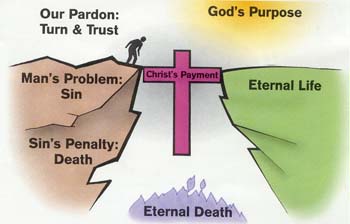
Man is a sinner. And by way of being sinner, it provided a way for the devil to seek to fullfil his agenda of tormenting, killing and destroying man. For the devil is already cursed and condemned eternally. The philosophy/practice of Salvation therefore is redemption of the human race from the torment of the devil and eternal death. For nothing else could have been done to set man free, apart from shedding the spotless blood of Jesus CHRIST.

Obedience to God by recognition of the true and justified sacrifice of the spotless blood of Jesus CHRIST which cleanses us from our former sinful self and are made anew by the grace of God (2 Corinthians 5:17). In that, we are made to assume the righteousness of Jesus (1 Corinthians 1:30), (2 Corinthians 5:21), (Romans 3:21-22; 4:13; 9:30, 10:4). It is by this way that we are made holy and acceptable before God. The conclusive affirmation here is that Salvation is only by God, and right in the way that He has directed us. There is nothing else besides it, you either take it and live, or deny it and die.


The Christian doctrine of Salvation is well stipulated in the Holy Scriptures. First of all, it is by accepting, and submission to the begotten Son of God; Jesus CHRIST. To know Jesus is to know God. All that God demands of us to know about Him, He has engraved it in Jesus. And if Salvation is only from God, so it is that everyone needs Jesus CHRIST if to be saved. And yes we are because Jesus is our Savior (John 14:9-11).

Salvation can't be made anything else other than what it is, more so what Jesus designed it to be. Many individuals have created versions of salvation but those (versions) are only known to those individuals. Salvation is well expounded in scripture. If it is less or more than what scripture tells us it is, then it becomes something else, not the form that Jesus CHRIST formed on the cross. Salvation is not a religion, it is not a practice, and it is not a lifestyle. It is life; it is recreating a relationship with God without which one is counted dead. It is not about what we do. It is never by right and not by merit. It only comes by God's grace (Ephesians 2:8), (Acts 15:11).

What is the process of acquiring Salvation?

Scripture is very clear on the process of acquiring Salvation, but the clearest scripture is (Romans 10:8-10). The process of Salvation must first of all involve recognition of the worthiness of the almighty God. And that Jesus is the indisputable Son of God. This is to be followed by one's acceptance and confession that Jesus Christ was sent by God the Father for none else but to die on the cross so that the sin of the world can be forgiven. And that Jesus rose from the dead and He is now seated on the right hand of God the Father (Acts 7:55-56), (Romans 8:34), (Ephesians 1:20), (Colossians 3:1). 

Then one should recognize that he/she is helplessness to overcome sin by self, and thereby submit and accept the redemptive sacrifice of Jesus Christ for the remission of sin. If all this is done, then one confesses to be saved and indeed he is.

Additionally, one should pronounce change of allegiance from the devil (by denying the devil and his works) to God's will and thereby follow in the footsteps of Jesus CHRIST. For a Christian must exhibit his allegiance to Jesus and God by both  good works (holiness) and thought (righteousness).

Why is Salvation only through Jesus?

Salvation is only through Jesus because He alone offered Himself to be the only true acceptable and justified sacrifice for the remission of sin. It is only Jesus who has lived in the human flesh free of sin. No body else could have. Jesus is the way, the truth, and the life without whom, nobody can have access to God the Father (John 14:6-7). No one else has ever made such a statement.

The life of Jesus was indisputably exceptional. Despite that He (Jesus) was indisputably sinless, He did not seek to find a way to condemn the sinful man, but He sought for a way (no matter the cost) to make us be like Him and to be justified. Who else could it be??? Who else could afford??? This is not something to be simply claimed, for one must be exactly what he says.


As that, all that is Salvation must have its roots in Jesus CHRIST, and the work He did on the cross. I mean the Salvation by which we are granted eternal life and are led to Heaven to meet God the Father. Jesus is the exact meaning of salvation.

Monday, 28 March 2016

Surely, there will be no sex in heaven. Jesus teaches that in heaven, we will all be spirits. We will all be like the angels of heaven which can't either be defined as male or female (Mathew 22:23-33). There will be no male or female; we will all be spirits, in the image of God. There will be no marriage and obviously no any such actions associated with marriage.


The primary purpose of sex on earth is to reproduce physical mortal bodies. In heaven, there is no need for sex so as to reproduce. There will not be these earthly physical mortal bodies in heaven.

However, there are some religions who are nursing the belief that there will be male and female in heaven and that sex will be there as it is here on earth. In fact they presume sex will be part of the rewards by God to whoever will have pleased Him. I must categorically say; this is a false belief with no any scriptural back up.

Having formerly been a Muslim, I have no choice but to say what I am going to say, and just the way it was taught to me. I was taught while still a young Muslim boy that when you die a Muslim, one of the rewards for dying a Muslim is to be given women who would present themselves to you when you need them. Such a belief would drive not only me but many of others to strive to be the Muslims that Allah wanted us to be. This is because nobody doubts how sweet and exciting sex can be. In fact, to Muslims, everything that is as sweet here on earth either to eat or practice is one of the rewards by Allah to those who closely follow after him. 

We were made to believe that just as the physical mortal person is here, so will he/she be in heaven and therefore all that that person enjoys or holds dear here on earth will equally be available to the same in heaven. The Muslim young men who set themselves ablaze today with the aim to die with or kill many others (non-believers in the Muslim faith, infidels), do it in the spirit that Allah will after all reward them with many sweet good things including virgin girls so as to thank them for the “good” job done. However though, just as I said before, all such is mere say with no evidenced proof.

Many other religions have strange beliefs; which I may not be able to mention one after the other, that are never founded. However though, the Christian Faith is very clear on such very topical issues. When we die, we have simply transformed into spirits, whether destined to hell or to heaven. There is no male or female spirit. There is therefore no mechanism of playing sex because it is an act that involves physical mortal bodies. In heaven, we will have put on heavenly bodies (1Corinthians 5:1-10), like the one Jesus put on when He ascended to heaven. Equally so, those who are destined to hell will put on the type of body which is suitable for hell fire.

Additionally, the rewards of being faithful believers and followers of Jesus CHRIST will not be as we envisage them here on earth. There may not actually be such rewards as we may presume (1 Corinthians 5:4), but one reward scripture states categorically is eternal life (Romans 6:23), what goes with it is only known to God almighty.